Straws for eyes
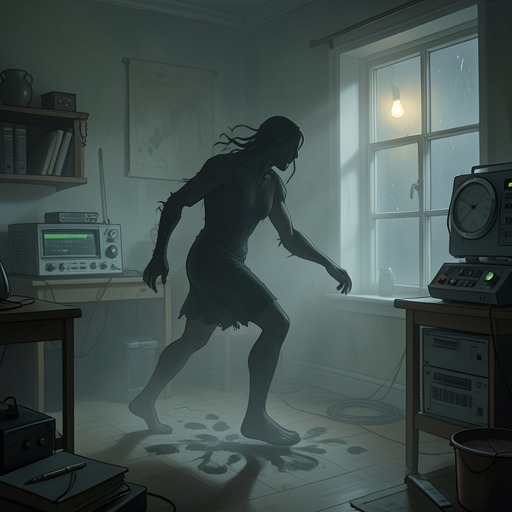
The Outsider (Stephen King Edition)“Straws for eyes” is the defining detail in the distorted figure’s appearance in two separate scenes: Grace Maitland describes seeing it in her bedroom, and Fred Peterson glimpses a similar presence while hanging himself. The phrase makes the figure’s gaze feel less like a human feature than an impossible, crude construction, and its return connects a child’s reported nightmare with an adult’s near-death vision.
Grace’s Description
Grace tells Sarah Maitland that the figure was there. She describes short, black hair standing up and a lumpy face like Play-Doh, then identifies its eyes as straws. Her account is insistently visual and specific, set against Sarah’s effort to explain the sight by pointing out that the bedroom is on the second floor. Sarah calls it a nightmare; Marcy Maitland tries to steady both girls and keeps them with her for the rest of the night.
The detail survives beyond the immediate exchange. After Sarah has gone to sleep, Marcy remains awake between her daughters, thinking about Grace turning toward the window in a dream so vivid she believed herself awake. The repeated image of the straw-like eyes thus outlasts the attempt to close the matter with a reassuring explanation: the scene ends not with confirmation of what Grace saw, but with Marcy awake and holding the possibility in mind.
Fred Peterson’s Vision
Later, during Fred Peterson’s attempted hanging, the same feature appears in a markedly different circumstance. As his grip fails and his feet hang above the lawn, Fred struggles for breath. Black spores bloom across his vision into toadstool shapes; before they overwhelm his sight, he sees a figure standing in the moonlit patio, one hand resting on the barbecue. Its features seem crudely formed, as if punched into being by a blind sculptor, and its eyes are straws.
The narrative keeps some uncertainty around this sight: Fred wonders whether the figure is a man at all. But the phrase itself is repeated plainly, carrying the recognition across the difference between Grace’s bedroom and Fred’s yard. In Grace’s scene, the description comes from a child who has been frightened awake; in Fred’s, it arrives amid choking, failing vision, and the apparitional forms of black spores. The shared feature binds the episodes without making their circumstances identical.
Recurrence and Significance
The phrase’s force depends on its stark simplicity. Grace’s description supplies it as the final, distinguishing detail in a sequence of physical traits; Fred’s scene repeats it after a more elaborate account of his failing sight and the figure’s crude face. In both cases, the eyes resist ordinary human description. They are recognizable enough to recur, yet strange enough to make the figure seem assembled rather than fully embodied.
That recurrence also complicates the characters’ attempts to contain what they have seen. Sarah labels Grace’s experience a nightmare, while Fred’s vision occurs at a moment when he is close to death. The expression does not itself settle how either encounter should be interpreted. Instead, it acts as a verbal link between them, preserving the figure’s identity through an image that is difficult to mistake and difficult to explain.